Why Kenya’s New Marine Cargo Insurance Mandate is a Game-Changer for the Economy

General
Why Kenya’s New Marine Cargo Insurance Mandate is a Game-Changer for the Economy
- By Brian Ndege
- July 2, 2026
Juma Mwangi stands at the congested Mombasa Port container terminal, sweating under the midday coastal heat. His company, Based Freight Logistics, has three twenty-foot containers sitting on the concrete yard. They hold industrial water pumps shipped from Shanghai, worth exactly KES 14,5000,000. Under the old system, Juma bought a Cost, Insurance, and Freight (CIF) package from a foreign underwriter based in China. Today, the Kenya Revenue Authority (KRA) customs agents are blocking his clearance. A new digital system went live on July 1, 2026. Without a local certificate, those pumps will sit at the port. Storage fees accumulate at KES 4,500 per container every single day.
That is the problem. Hundreds of Kenyan importers face severe clearance delays because they still buy insurance foreign suppliers package into their trade deals.
What exactly is the new marine cargo insurance mandate?
The national mandate requires all importers to purchase marine cargo insurance exclusively from insurance companies licensed within Kenya. Treasury Cabinet Secretary John Mbadi finalized this directive during the 2026/27 Budget Statement in Parliament. The rule enforces Section 16A of the Marine Insurance Act. It completely stops the old habit where foreign suppliers bundled overseas insurance into your shipping terms.
Every single shipment destined for Mombasa Port or any inland border post must now have a local policy. You cannot clear your goods without it. The Kenya Revenue Authority integrated its Integrated Customs Management System (ICMS) directly with the Insurance Regulatory Authority (IRA) portal.
Here is the thing. If you try to clear cargo using an insurance certificate from an overseas underwriter, the ICMS system flags the entry. It rejects the declaration automatically. This rules applies to all goods, whether you are bringing in a single second-hand vehicle or importing massive factory machinery.
How much money has Kenya been losing to foreign insurers?
Kenyan traders have been exporting billions of shillings in premiums to overseas financial markets for decades. Every time a local entrepreneur ticks the box for a standard CIF contract, the insurance money leaves our economy. Estimates from the Ministry of National Treasury reveal that Kenya loses up to KES 30 billion annually in outbound marine insurance premiums.
Foreign underwriters in Dubai, London, and Beijing pocket these massive sums. Meanwhile, the local financial sector misses out on essential investment capital. That is the problem the state is fixing. Keeping that KES 30 billion within our borders provides immediate support to the local economy.
It strengthens our financial institutions. It also helps ease the immense structural pressure on the Kenyan shilling by cutting down unnecessary foreign exchange outflows.
Is the Kenyan insurance sector big enough to handle this risk?
The local market possesses massive underwriting capacity to absorb the sudden influx of cargo risks. A powerful coalition of major domestic insurers has aggressively pooled resources. Local providers like APA General Insurance, Britam, CIC General Insurance, and Old Mutual have scaled up their financial capabilities.
The industry has built a combined local marine underwriting pool worth KES 4 billion to handle massive cargo consignments. This financial cushion covers everything from lost bulk grain shipments to damaged industrial machinery.
Let's be honest. In previous years, critics worried that local firms lacked the quick capital to pay massive maritime claims. The current structured reinsurance setups eliminate that worry entirely. Local underwriters distribute heavy risks across top-tier international reinsurers. Your cargo remains perfectly safe.
How does the new Digital Marine Cargo Insurance platform work?
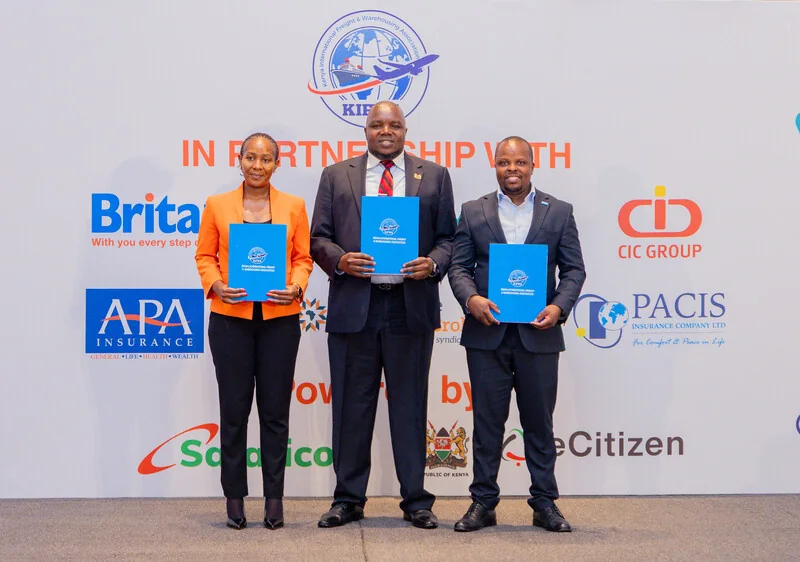
The newly launched Digital Marine Cargo Insurance (DMCI) platform automates the entire onboarding and certificate generation loop. The system connects the Kenya International Freight and Warehousing Association (KIFWA), local insurers, eCitizen, and KRA into one single network. You no longer have to visit physical offices in Upper Hill or Mombasa town to get a cover note.
The process kicks off right after your supplier generates the Import Declaration Form (IDF) inside the KRA ICMS system. You log into your local insurer's portal, input the IDF number, and the system pulls your cargo details instantly.
You pay your premium online via the eCitizen gateway or M-Pesa. The platform generates an official Digital Marine Cargo Insurance certificate immediately. The ICMS customs system reads this certificate in real time, validating your clearance paperwork instantly.
What are the dynamic costs of local marine insurance policies?
The table below breaks down standard premium rates and specific financial structures for local marine cargo insurance across various item categories.
|
Cargo Category |
Standard Valuation Example (KES) |
Average Local Premium Rate |
Estimated Premium Cost (KES) |
|
Used Motor Vehicles |
KES 2,500,000 |
0.45% |
KES 11,250 |
|
Industrial Machinery |
KES 15,000,000 |
0.35% |
KES 52,500 |
|
Electronics & IT Equipment |
KES 8,000,000 |
0.55% |
KES 44,000 |
|
Pharmaceuticals/Cold Chain |
KES 12,000,000 |
0.65% |
KES 78,000 |
|
Bulk Agricultural Imports |
KES 25,000,000 |
0.30% |
KES 75,000 |
Why is local insurance better for settling claims?
Chasing a claims settlement with a foreign underwriter in a different time zone is a logistics nightmare. If your cargo suffers seawater damage or gets stolen overseas, a foreign insurer requires endless paper trails. They often demand complex international surveyor reports that take months to verify. Your business capital remains stuck while you wait.
Switching to local underwriters changes the entire situation. If your container arrives at Mombasa Port with missing parts, a local surveyor visits the port yard within 24 hours.
You can walk directly into an insurance office along Mombasa Road to resolve hitches. Local claims settle in Kenyan shillings directly into your local commercial bank account. This rapid process protects your cash flow and keeps your business running smoothly.
Get Covered Kenya mid-article CTA Banner
🚢 Protect Your Cargo Instantly via eCitizen!
Do not let your containers get stranded at Mombasa Port. Get your verified Digital Marine Cargo Insurance certificate instantly through our fully integrated local compliance portal.
Secure Your Local Marine Cover Now
Frequently Asked Questions
What happens if I import goods under CIF terms after the July 2026 deadline?
The KRA Integrated Customs Management System will block your cargo declaration automatically during the lodgement stage. You must purchase a local marine insurance policy through the DMCI platform to clear the goods. Your foreign insurance policy will not serve as a valid document for customs clearance in Kenya.
Which government agencies are enforcing this new digital marine insurance mandate?
The Insurance Regulatory Authority and the Kenya Revenue Authority jointly enforce the mandate. The system uses a live API link that matches your Import Declaration Form data with local insurance certificates before approving cargo release at all ports of entry.
Can I pay my marine insurance premiums using mobile money?
Yes. The Digital Marine Cargo Insurance platform connects directly with the eCitizen payment gateway. This integration allows you to pay insurance premiums instantly through M-Pesa, Airtel Money, Pesaflow, or local commercial banks.
Does the local mandate apply to air freight arriving at Jomo Kenyatta International Airport?
Yes. The local marine cargo insurance mandate covers all commercial imports entering Kenya through any official point of entry. This includes sea freight at Mombasa Port, air freight at JKIA, and land border posts like Malaba, Busia, and Namanga.
How will this change affect my trade agreements with international suppliers?
You must instruct your international suppliers to alter their shipping terms from Cost, Insurance, and Freight (CIF) to Cost and Freight (CFR) or Free on Board (FOB). This adjustment ensures the supplier excludes the insurance cost from their final invoice, allowing you to pay it locally.
The days of exporting Kenyan wealth through foreign insurance premiums are gone. Importers must proactively adjust their shipping contracts from CIF to CFR or FOB terms immediately. Do not wait for your cargo to drop anchor at Mombasa Port to fix your paperwork. Open an account on the Digital Marine Cargo Insurance platform today. Partner with a licensed domestic underwriter to keep your supply chain moving without costly port hitches.